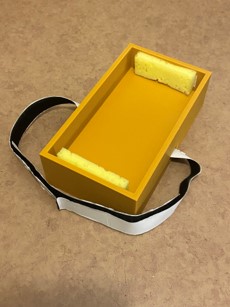
Phone Holder design

Overview
Employing ingenuity and precision, we crafted a phone holder for Tiffany's electric wheelchair, seamlessly integrating convenience into her mobility experience. Designed with durability in mind, our innovative solution ensures robustness without sacrificing ease of use. Engineered to withstand daily wear and tear, the holder boasts a secure mounting mechanism, effortlessly attaching to the chair for reliable support. With a thoughtful combination of functionality and practicality, our creation not only enhances Tiffany's accessibility but also reflects our commitment to delivering tailored solutions that elevate her comfort and convenience with every journey.
Reflection
Looking back at how I used AutoCAD and 3D printing to make Tiffany's phone holder for her
wheelchair, it's been a cool and eye-opening experience. First, I used AutoCAD to plan out exactly how
the holder would fit on her chair. I paid close attention to every detail to make sure it would work
perfectly.
Then, when the designs were ready, I moved on to 3D printing. Watching the designs come to life in real
life was really cool. 3D printing let me make really detailed parts that would have been hard to make
otherwise.
As I kept working on the project and testing out different versions, I learned a lot about how to make
things with 3D printing. It was neat to see how adjusting small details could make a big difference in
how well the holder worked.
Finally showcasing our design to IaI's and TA's was a pivotal moment. Observing the potential
applications of our creation was enlightening, particularly when considering how it could assist
individuals like Tiffany.The mere thought of how technology can improve people's lives on a daily basis
resonated deeply. It's truly empowering to realize that something I've contributed to could enhance
someone's quality of life in a small but meaningful way.
Design Process
-
Modeling
1. Understanding User Needs and Constraints:
-Conduct interviews and observations with Tiffany to understand her mobility challenges
-Identify key functionalities desired by Tiffany
2. Concept Development:
-Develop sketches, mockups, and prototypes
-Evaluate concepts against Tiffany's requirements
-Incorporate feedback and refine designs
3. Engineering and Prototyping:
-Create 3D models and prototypes
-Test prototypes for functionality and durability.
4. Testing and Validation:
-Conduct rigorous testing under simulated conditions
-Gather feedback from users.
-Iterate designs based on test results and feedback
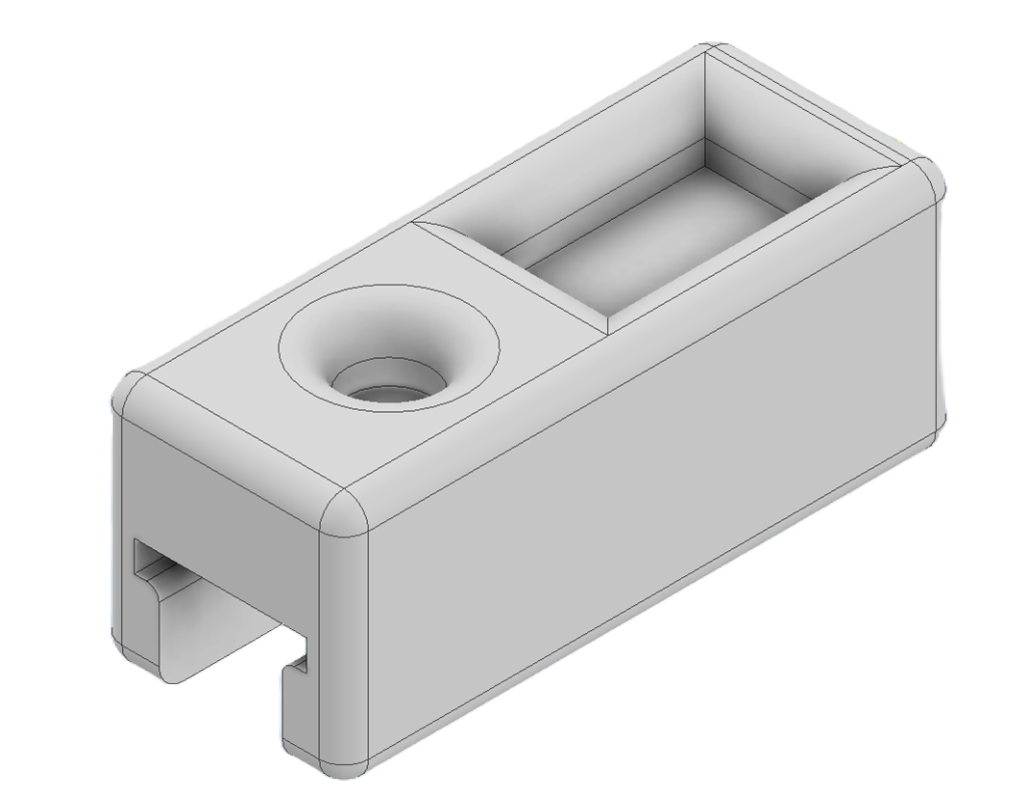
Initial CAD Prototype
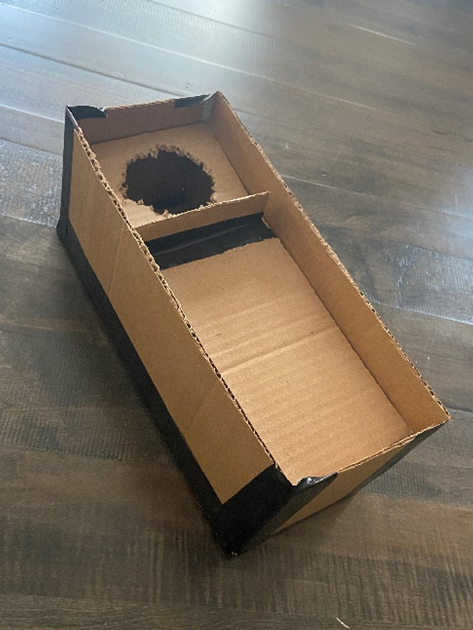
Physical initial Protoype
Finalized CAD Prototype
Finalized Physical Protoype